
Wall Paintings of the Mysterious Room in Pompeii: A Value Equal to a Legionary's Annual Earnings
Wall painting of Pompeii's mysterious room - During archaeological research conducted in the ancient Italian city of Pompeii, the value of wall paintings discovered in a small room astonished scientists. For the first time, experts have determined the volume of Egyptian blue pigment applied to these walls, and the results are quite surprising.
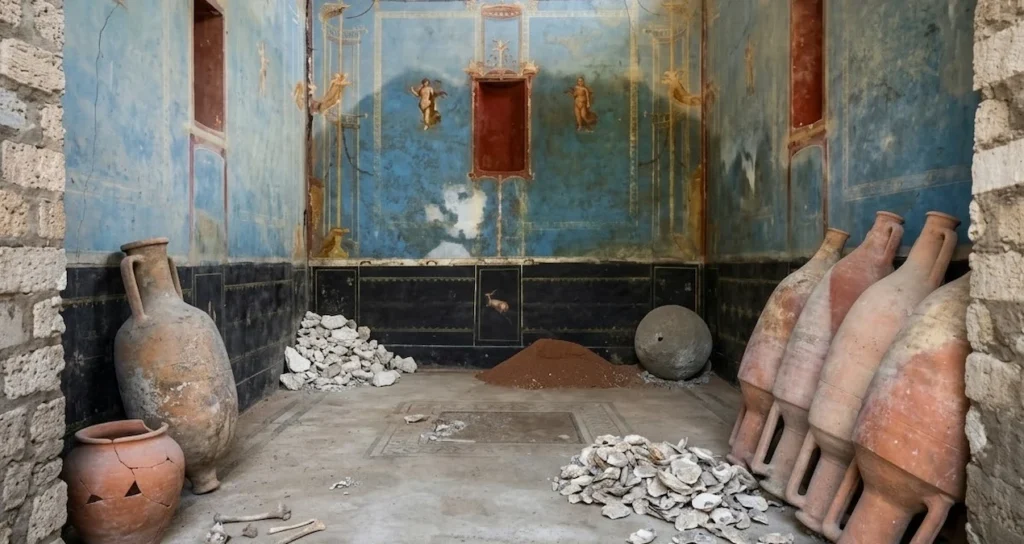
Research shows that the total value of the Egyptian blue pigment adorning the room's walls is approximately equivalent to a legionary's annual salary during the ancient Roman period. This discovery opens new perspectives on how luxury and wealth were displayed during that era.
Egyptian blue was considered one of the most valuable and difficult-to-produce artificial pigments available in antiquity. Its production required complex chemical processes, which is why it was used only by very wealthy families or individuals of high social standing.
The discovery of such a large quantity of this rare pigment on the walls of a small room in Pompeii clearly demonstrates the high status and financial capabilities of the room's owner in society. This fact also reaffirms the symbolic value of colors and materials in ancient Roman art.
The city of Pompeii, buried under ash as a result of the eruption of Mount Vesuvius, has been preserved for millennia, offering us a unique window into the lifestyle of antiquity. This latest discovery also brings to light yet another of the city's countless secrets.
Reader comments
There are no comments yet. Be the first to comment.
Write a comment