
Geopolitical Shifts in Central Asia: China Overtakes Russia's Influence
China's Influence Grows Russia's Position - China's influence grows in Central Asia - For a long time after the Cold War, Central Asia operated on the principle of a "managed condominium." In this geopolitical structure, Russia played the role of a strong security guarantor for the region, while China acted as the main economic partner. This model was considered one of the main pillars of the region's stability and development.
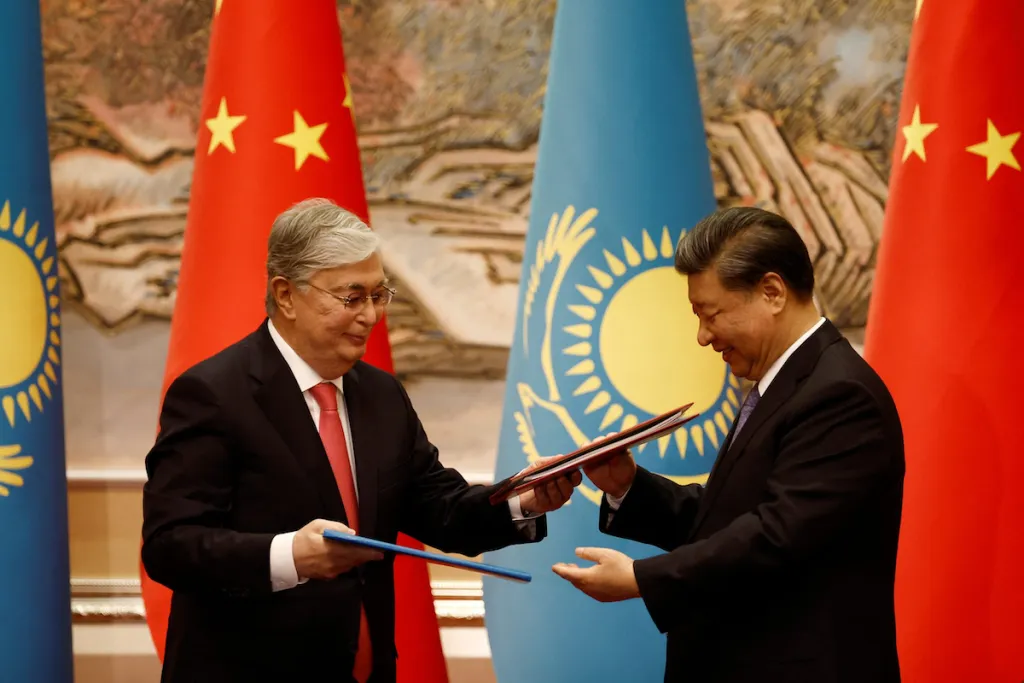
However, while the war in Ukraine has not completely destroyed the China-Russia partnership, it has fundamentally altered its internal balance. This condominium, previously based on relatively equal relations, is now moving towards a more unequal structure.
The blows inflicted by the war on Russia's military and economic resources have undermined its traditional security role in Central Asia. As Moscow has focused its attention and capabilities on the Ukrainian front, its sphere of influence in the region has significantly diminished.
Against the backdrop of this weakening, China is further increasing its economic and political influence in Central Asia. Beijing is deepening its ties with the countries of the region through trade, investment, and infrastructure projects, solidifying its position as the main economic actor in the region.
Consequently, the "managed condominium" has now transformed into an unequal partnership dominated by China's economic superiority and Russia's weakened security role. This situation could lead to long-term changes in Central Asia's geopolitical landscape.
Reader comments
There are no comments yet. Be the first to comment.
Write a comment