
Project of the Century Could Slow Down Earth: China's Giant Hydroelectric Power Station Poses Global Risks
The government of the People's Republic of China is preparing to build the world's largest hydroelectric power station on the Tibetan Plateau. This ambitious initiative, aimed at meeting energy demands, has raised significant concerns among scientists and environmentalists. Known as the "Project of the Century," this colossal construction has sparked widespread discussions about its potential impact on the Earth's rotation speed and even its axis.
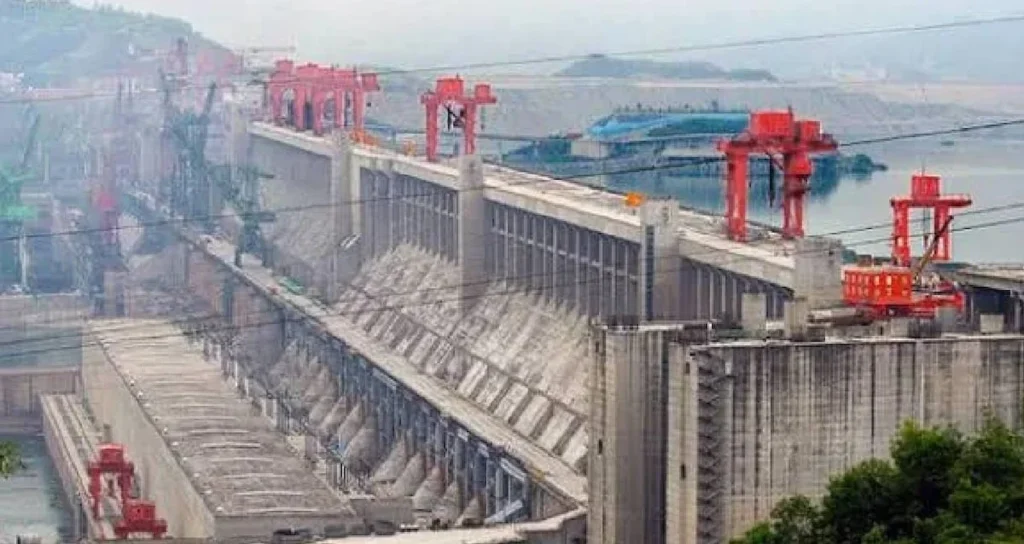
This hydroelectric power station, planned by the Beijing leadership, will be erected in a strategically important region of the Tibetan Plateau. The scale of the project is so immense that, once completed, it will become the world's largest energy producer, supplying a significant portion of China's energy demand.
However, experts warn that this massive body of water will significantly alter the Earth's mass distribution. According to their assessment, the weight of the accumulated water could change the Earth's rotational axis and the length of the day. Such changes could lead to unforeseen complications for our planet's geophysical stability.
Previously, it was suggested that China's Three Gorges Dam project had a slight impact on the Earth's rotation. However, the scale of this new project in Tibet will be many times larger than the Three Gorges Dam, implying that the potential effects will be more serious. Scientists specifically emphasize that the concentration of mass at higher latitudes, moving away from the equator, will affect the Earth's moment of inertia.
The impacts of such global-scale projects on the environment and the planet itself have always been a subject of discussion in scientific circles. The Tibet project, therefore, must be comprehensively evaluated not only in terms of energy production but also with regard to global climate change and ecological balance.
While the Beijing leadership highlights the project's benefits, the international community and scientists demand a full investigation of potential risks and their transparent presentation to the public. The long-term consequences of geophysical changes are not yet fully known, raising serious questions for future generations.
Reader comments
There are no comments yet. Be the first to comment.
Write a comment