
China Surrounded the Taklamakan Desert with a 3050-Kilometer Green Belt: An Ecological Success
China has successfully completed a colossal ecological project, initiated 46 years ago, with the aim of preventing the expansion of the Taklamakan Desert, the world's second-largest shifting sand desert. This magnificent initiative, which has encircled this desert known as the "Sea of Death" with a 3050-kilometer continuous green belt, demonstrates the triumph of human will against nature.
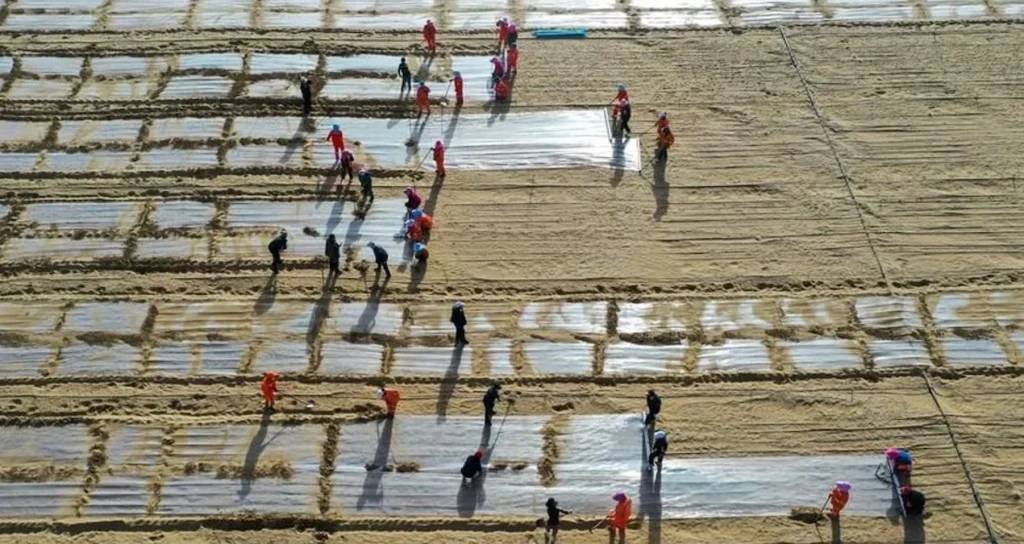
The Taklamakan Desert is located in China's Xinjiang Uyghur Autonomous Region and constitutes a significant part of the ancient Silk Road. However, its continuous expansion posed a serious ecological and economic threat to surrounding regions, endangering agricultural areas and settlements by burying them under sand.
Within the scope of this project, the colossal green barrier created around the desert is composed of millions of trees and shrubs. This 3050-kilometer-long strip serves as a natural barrier preventing desert sands from spreading with the wind and contributes to the conservation of the region's biodiversity.
As a result of 46 years of arduous work, the final connecting point has also been greened, and the green belt has been completely finished. This is regarded as an exemplary step in combating desertification, not only for China but for the entire world.
The primary goal of the project is to protect fertile land around the desert, efficiently manage water resources, and improve the quality of life for the region's population. The green belt regulates the microclimate, lowering temperatures and increasing air humidity.
This ecological success of China demonstrates how effective long-term planning, consistent efforts, and a scientific approach can be in solving large-scale ecological problems. The green wall built around Taklamakan is a symbol of hope for future generations.
Reader comments
There are no comments yet. Be the first to comment.
Write a comment